Shopping note: We discuss what to look for, rather than claim hands-on testing. Current shopping links are ordinary retailer links. Affiliate disclosure.
Plan for the wet parts of the route
Rainy dressing begins with a route, not a trench coat. Think about the walk to the station, the uncovered stretch outside the office and whether you will be standing at a bus stop. In New York, a short forecasted shower can still mean wet steps and a crowded train where a damp coat has nowhere to go. Choose an outfit that can handle those transitions. A polished look is easier to maintain when your hem, shoes and bag are not absorbing water throughout the journey.
Start with trousers or a skirt that clear the ground, then add footwear appropriate to the conditions. A long, flowing hem may look appealing in a photograph but can collect water at crossings. Test the outfit while holding the umbrella and carrying your normal bag; free movement matters more than a perfectly arranged silhouette.
Understand what the outer layer promises
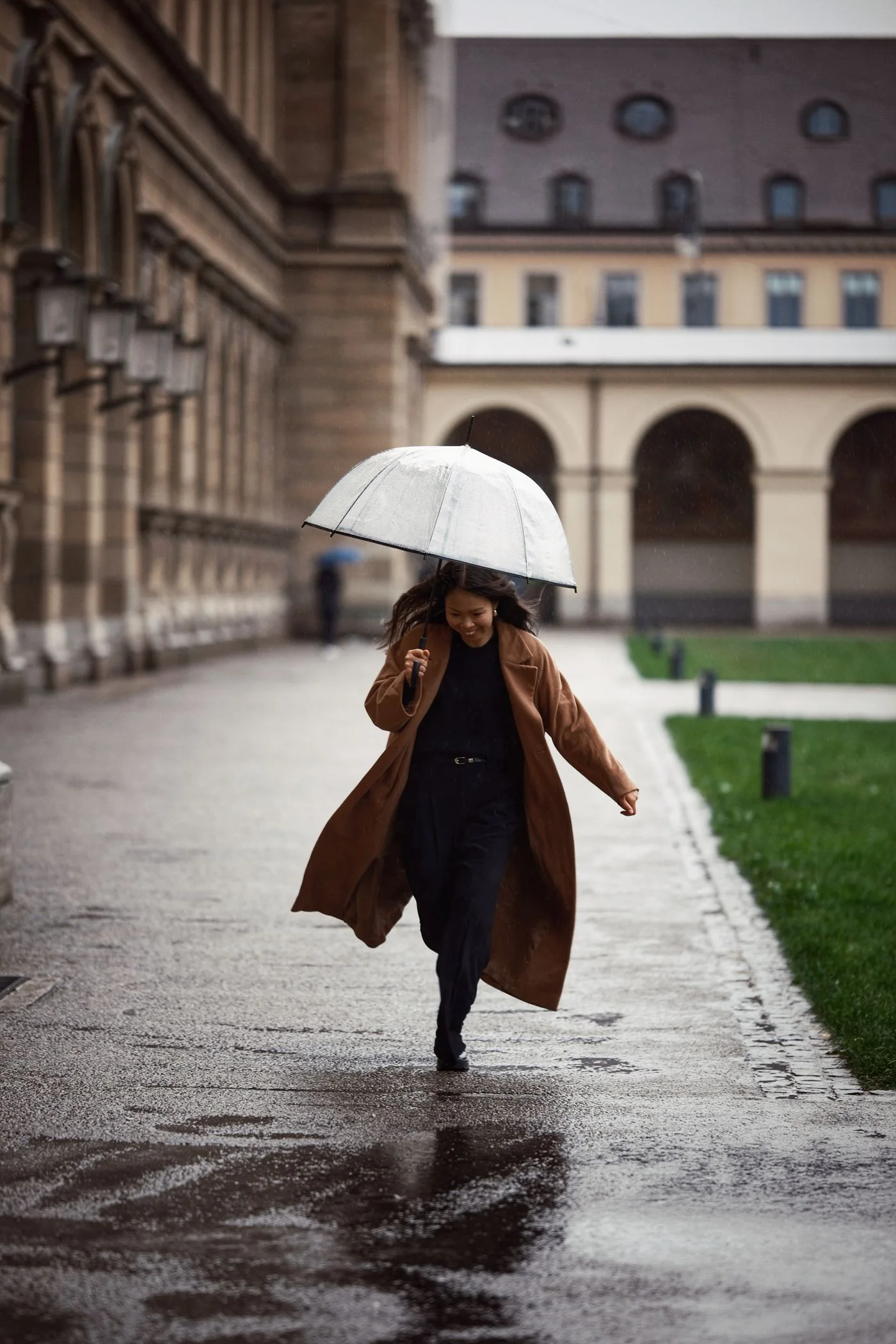
Water-resistant and waterproof are different claims, and neither should be assumed from the appearance of a coat. Read the current product information for the conditions the manufacturer describes. Seams, closures and the hood affect coverage as well as the main fabric. A traditional trench may be suitable for a brief shower but less useful in persistent rain. If you regularly walk in heavy weather, compare purpose-designed rain layers before choosing a coat solely because it looks tailored.
Try the coat over a real outfit rather than a thin fitting-room layer. Raise your arms, close the front and check whether the sleeves cover your wrists when holding an umbrella. A belt can add shape, but a coat that only feels comfortable when left open may not meet your weather needs. Consider where the wet outer layer will dry when you arrive.
Keep the inside of the outfit comfortable
A warm train and a wet street can create competing temperature needs. Use a breathable base and a removable middle layer rather than relying on one heavy sweater. Choose fabrics whose care requirements fit the likelihood of splashes and frequent washing. Pale trousers are not forbidden, but they may require more attention if your walk includes construction sites or dirty puddles. Darker hems can be a practical choice without turning the entire outfit into black rainwear.
Pay attention to bags and closures. An open tote makes access easy but leaves belongings more exposed. A securely closing bag and a separate protective sleeve for papers or electronics may be useful. Do not assume leather, coated fabric or a water-resistant label means every part of the bag will keep contents dry during prolonged exposure.
Buy for repeated use, not one forecast
If you already own a suitable coat, the more worthwhile purchase might be footwear, a compact umbrella or a bag insert. Nordstrom is a place to compare different outerwear and footwear categories, while Uniqlo can be a starting point for simple layers. Check current descriptions and return policies directly. There is no need to buy an entire rainy-day outfit if one carefully chosen change protects the clothes you use already.
For shoes, inspect the sole, fit and manufacturer guidance about water exposure. Tread appearance alone does not establish how a shoe will perform on every wet surface. Wear new footwear indoors first where the return policy allows, and check heel movement and pressure at the toes. The most useful pair is one you can comfortably wear for the distance your route requires.
Give the clothes a sensible arrival routine
At your destination, allow damp items to air dry according to their care instructions instead of leaving them sealed in a bag. Keep a small cloth for wiping splashes if that suits your routine. On days with severe weather, adjust travel plans when necessary; clothes are only one part of preparation. The everyday goal is simpler: arrive comfortable, keep important belongings protected and avoid spending the rest of the day in an outfit that feels wet.
Check the umbrella alongside the coat rather than treating it as a separate afterthought. Open it in an appropriate space and notice whether you can carry the bag comfortably with the other hand. A compact size is convenient to store, while a larger canopy may provide different coverage. Choose what you can handle on your actual route and follow the maker's guidance in windy conditions.
Before you decide
- Check the forecast and uncovered walking time.
- Keep hems away from wet pavement.
- Read weather-protection claims carefully.
- Test coat movement with actual layers.
- Plan where wet items can dry.
A few useful answers
Is a trench coat enough for rain?
It depends on the specific coat and the weather. Check the manufacturer's stated protection, seams and closures. A trench silhouette alone does not tell you whether the garment is intended for extended rain exposure.
Can I wear leather shoes on wet days?
Follow the maker's guidance for the particular leather and construction. Some pairs tolerate limited exposure better than others. Avoid treating all leather footwear as interchangeable, and allow wet shoes to dry as instructed.
Published and last updated February 10, 2026. Send an editorial correction.