Shopping note: We discuss what to look for, rather than claim hands-on testing. Current shopping links are ordinary retailer links. Affiliate disclosure.
Start with distance, not the photograph
Loafers can connect tailored trousers, denim and a simple skirt, which makes them appealing for a small city wardrobe. Yet a pair that looks polished beside a café table may not suit a day with two train transfers and a long walk home. Estimate your normal walking distance and the surfaces you encounter before shopping. The shoe needs to work for your route and your feet. No style name or brand can guarantee comfort across different people, and an attractive silhouette is only one part of the decision.
Choose the socks or hosiery you expect to wear, then use them during fitting. Bare feet, thin tights and thicker socks can change the way the same shoe sits. If you want the loafers to serve several seasons, test the combination that gives the least spare room rather than assuming the fit will adjust later.
Check where the shoe holds you
A loafer has no laces to fine-tune the fit, so the relationship between the heel, instep and forefoot matters. Walk on a clean indoor surface where the return policy permits. Notice whether your toes have room, whether the heel lifts excessively and whether the upper presses across the instep. Small movement is different from a shoe slipping off; persistent rubbing or pain is a reason to reassess the size or shape. Do not count on an uncomfortable pair becoming suitable through determination.
Try both shoes and take more than a few steps. Feet can differ, and a successful fit on one side does not settle the other. If you use orthotics or inserts, check whether the shoe accommodates them without creating new pressure. For ongoing foot pain or a specific medical concern, seek individualized advice rather than relying on a fashion buying guide.
Balance structure and walking needs
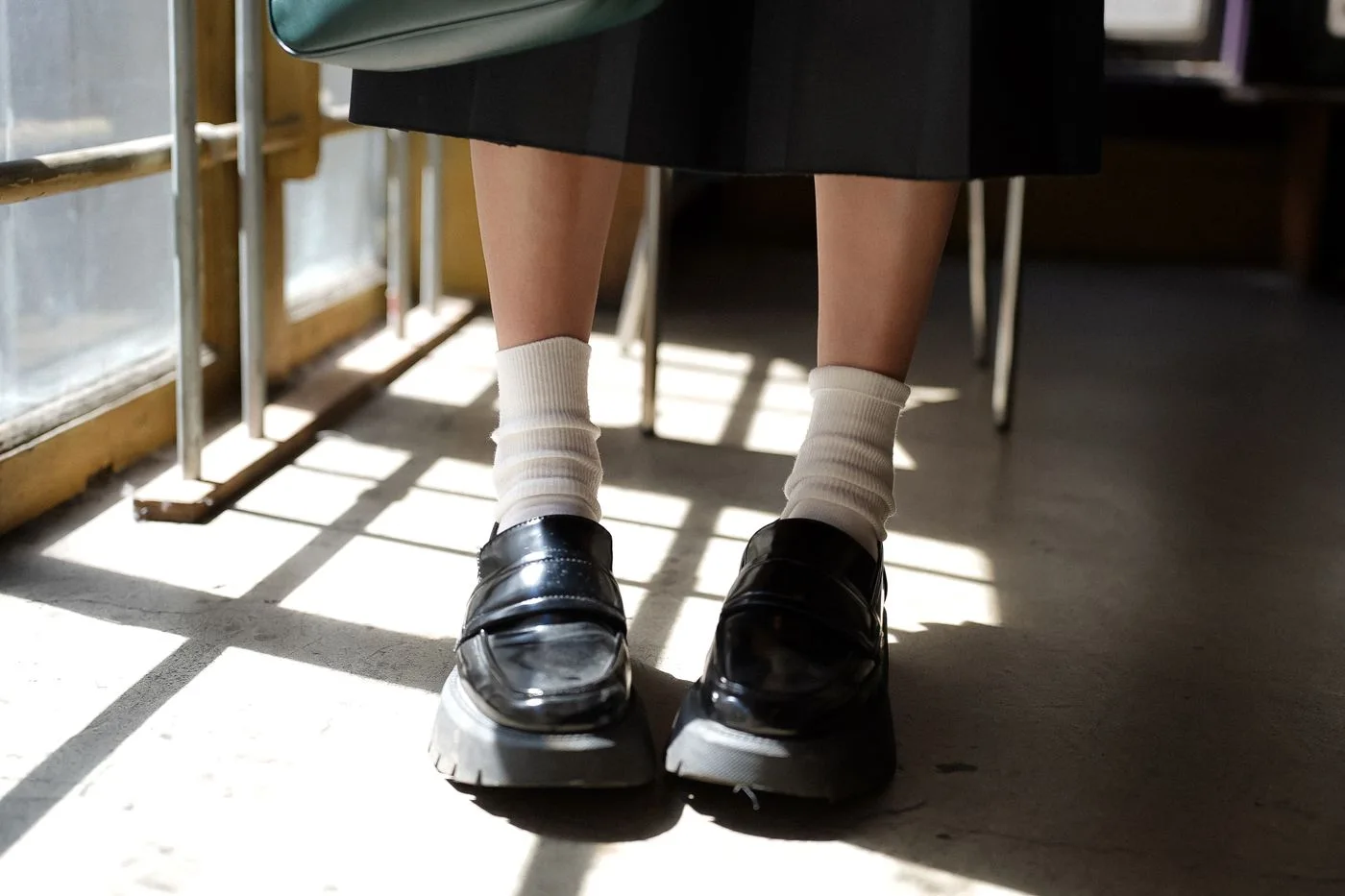
A substantial sole can change the visual balance of wide trousers or a midi skirt, while a slimmer sole may feel less visually heavy. Neither appearance tells the whole story about flexibility, grip or comfort. Bend and handle the shoe only as the store allows, read the construction information and consider the weight. A stiff upper and a heavy sole might feel different after an hour than they do in a short fitting. Compare the complete experience instead of selecting one desirable feature in isolation.
Consider the weather too. A smooth dress sole and a shoe described as suitable for wet conditions serve different purposes. Follow the manufacturer's care and exposure guidance, and keep another option for days the loafers are poorly suited to. A versatile wardrobe does not require every shoe to perform every job.
Make the purchase fit the wardrobe
Bring photographs of your most worn trousers and skirts when comparing pairs at Nordstrom, Madewell or Everlane. Try to picture the loafers with three actual outfits rather than a hypothetical new wardrobe. Black can be useful with dark tailoring, while brown or burgundy may connect existing warm tones. Choose the color that solves your own combinations. If you already own a nearly identical pair, identify what the new one improves before treating it as a wardrobe gap.
Review current return rules carefully, including whether outdoor wear affects eligibility. Do an indoor trial before committing to a long commute. The budget should account for likely maintenance, such as appropriate care products or eventual repairs, but do not assume every construction can be resoled. Ask the seller or a qualified repairer about the particular pair if repairability is important to your purchase.
Introduce the pair gradually
Once you decide to keep the loafers, start with a shorter outing and pay attention to your feet. Carry an alternative if the day allows. This is a practical check, not an instruction to endure blisters as a necessary stage. The successful pair is one you can wear comfortably with clothes you already own, so it earns its place through repeated useful days rather than an impressive unboxing.
Notice the socks as part of the outfit, too. A visible sock can connect a loafer to a casual trouser or provide contrast with denim, but the thickness also changes the fit. Set aside the pair used during a successful fitting so you can recreate the same conditions. If a different sock makes the shoe feel crowded, the styling adjustment is not worth discomfort through the day.
Before you decide
- Fit both shoes with your usual socks.
- Check toes, instep and heel while walking.
- Read indoor-trial and return conditions.
- Compare the weight as well as the shape.
- Identify three existing outfits for the pair.
A few useful answers
Should loafers feel tight when new?
They should hold the foot securely without painful pressure. Materials may change with wear, but stretching is not a dependable fix for the wrong shape or insufficient length. Reassess a painful pair before committing.
Is a chunky sole automatically more comfortable?
No. Weight, flexibility, fit and the way your foot moves all matter. Compare actual pairs through an allowed indoor fitting instead of using sole thickness as a shortcut for comfort.
Published and last updated March 10, 2026. Send an editorial correction.