Shopping note: We discuss what to look for, rather than claim hands-on testing. Current shopping links are ordinary retailer links. Affiliate disclosure.
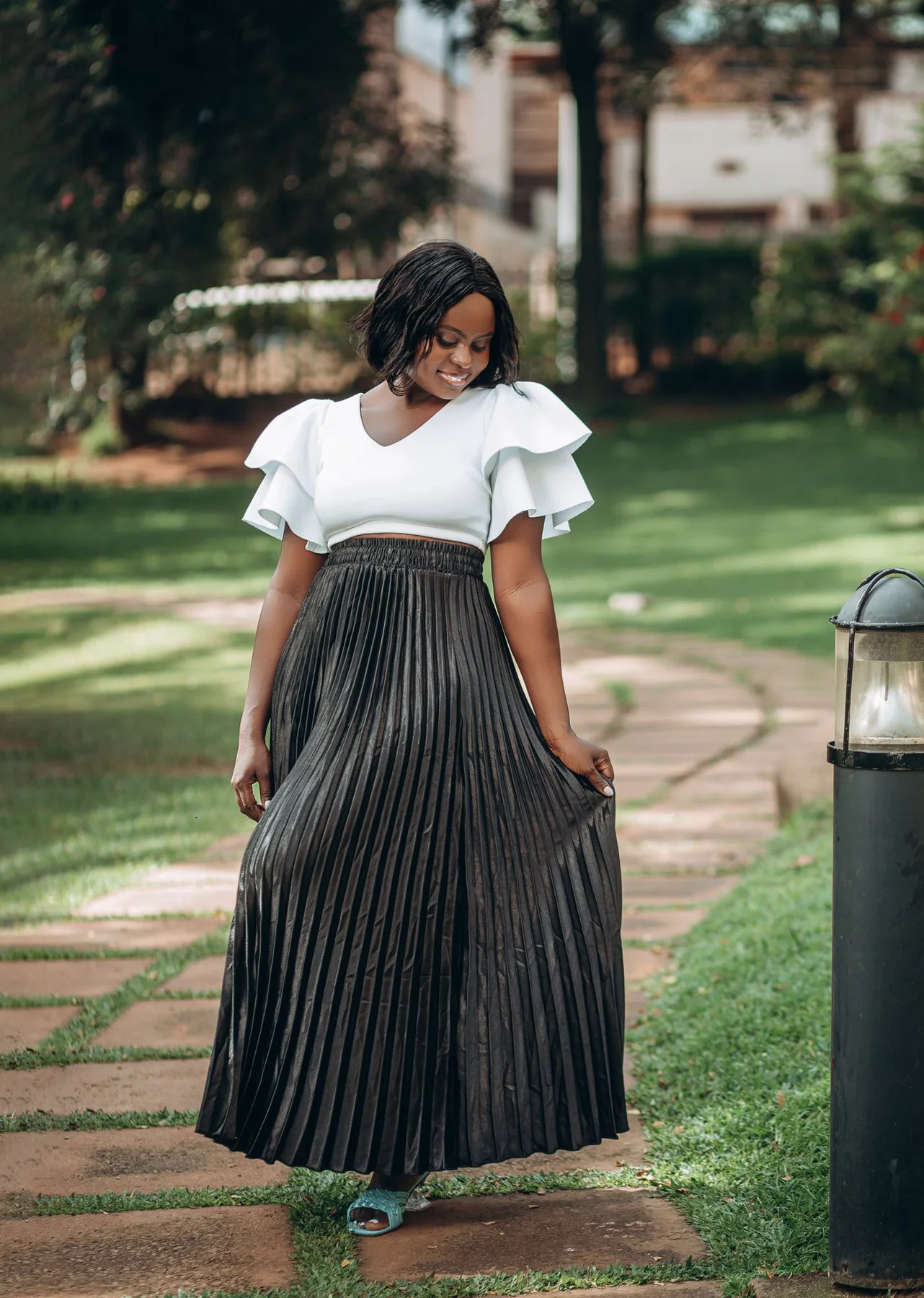
A long pleated skirt introduces many repeated vertical edges before the rest of the outfit is considered. A familiar plain top can give those folds a quieter neighbor, leaving their shape clear. Begin with actual clothes and compare the waist overlap rather than adding another pattern immediately. The useful choice concerns how the upper and lower areas meet, not a rule that every pleated skirt must have the same kind of top.
Read the skirt in its ordinary position
Wear the garment as intended and look at the broad silhouette from a normal distance. Fine folds may merge into a general textured area, while wider pleats remain more distinct. This affects how much visual activity the lower half supplies.
Keep condition and fit questions separate. A photograph of flowing pleats cannot establish that another skirt is ready or appropriate for the day's plan. The actual garment's requirements remain relevant alongside the appearance comparison.
Choose a plain top already understood
Use a familiar piece whose neckline and sleeves have their own clear role. Plain does not mean shapeless: a collar, high neck or sleeve edge introduces structure even without print. Look at the whole upper area before deciding jewelry is needed.
Keep the top in a normal supported arrangement. A forced tuck can create a neat waist for one image while changing immediately with movement. The practical reference should show a version that can be repeated without constant adjustment.
Compare the visible waistband
Notice how much of the skirt's upper edge remains exposed. A longer top can conceal it and emphasize the pleated area below; another familiar length makes the waist boundary clearer. Both are actual proportion choices rather than universal corrections.
Use a relaxed arm position for at least one view. A hand covering the waist can hide the detail being evaluated. A scenic pose may remain a separate photograph, but it should not be the only outfit record.
Keep footwear connected to the real plan
Choose familiar shoes appropriate to the activity and observe how much appears beneath the skirt. A long hem may show only a modest endpoint. The shoe's visual role does not establish practical suitability, which belongs to the actual pair and day.
Leave the bag steady while reviewing the top-and-skirt relationship. Several simultaneous accessory changes can make one version seem more considered without showing whether the plain upper shape itself contributed.
Record the useful boundary
Keep a short note naming the skirt and top with the waist arrangement that mattered. The plain top leaves the pleats clear is enough to guide another combination, without labeling every possible pairing as either correct or wrong.
A quiet upper shape can allow familiar pleats to supply most of the detail. Understanding that possibility gives the skirt another ordinary role while leaving a new patterned top or statement accessory as a separate preference rather than the missing completion of the outfit.
Related reading
The City Blazer + Midi Skirt, Wear a Cardigan with a Full Skirt without Constant Retucking.
Published and last updated August 12, 2022. Send an editorial correction.


