Shopping note: We discuss what to look for, rather than claim hands-on testing. Current shopping links are ordinary retailer links. Affiliate disclosure.
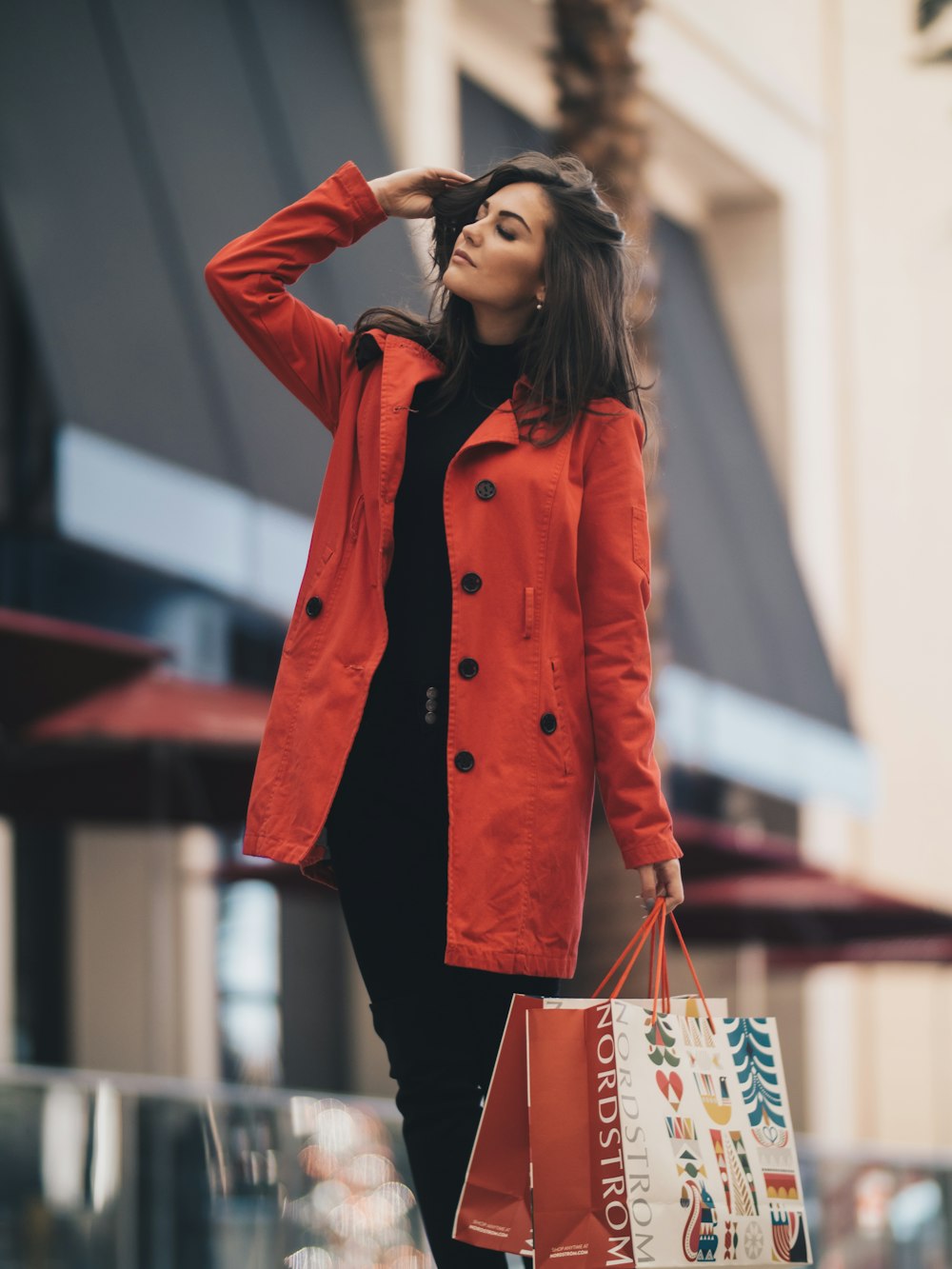
A red coat can supply the main color in an outfit while a familiar dark base remains quiet beneath it. Begin with the actual top and lower garment rather than building a new set of accessories around the outerwear. The coat's opening changes how much dark fabric remains visible, giving the same clothes more than one ordinary version. A clear comparison can make that relationship useful beyond a dramatic street photograph.
Build the dark base first
Choose familiar pieces with a defined role in the day. Look at the neckline, waist and shoes together before adding the coat. The indoor version should remain understandable when the bright layer is removed.
Two dark garments need not be identical in tone. Observe their actual relationship in ordinary light rather than expecting a screen image to supply an exact match. Keep any unresolved fit or care task separate from the visual comparison.
Add the red area normally
Wear the coat using the supported openings and fastenings appropriate to the plan. An open front leaves a broad dark center; a closed version makes red more continuous. Notice what the real garment naturally allows.
Avoid holding the fronts apart in every view. The practical reference should show the arrangement that remains during movement, not a temporary frame created by a hand. A flattering pose can be a separate image if desired.
Read the sleeve contribution
The coat's color appears near the hands as well as across the torso. These repeated red areas may already connect the outfit sufficiently. A red bag or shoe is not automatically missing simply because another accessory category is available.
Look at the ordinary seated version if it belongs to the day. The bright sleeves can remain prominent while much of the front is outside the frame. This helps explain why a full-length image and a table-level view give different impressions.
Keep the first accessory choices familiar
Use the bag and footwear already appropriate to the actual plan. Dark accessories can continue the base, while another quiet neutral can remain distinct. Neither needs to repeat red to make the coat intentional.
If a suitable red accessory is owned, try it afterward as a separate option. Repetition expands the bright area and may create a larger theme than you wanted. The single-coat version remains a complete choice rather than an unfinished stage.
Preserve two usable forms
Record the actual base garments and coat-on arrangement with a short note. Include the coat-off version if it serves a different part of the day. Naming the pieces is more helpful than describing the whole look as bold.
The red coat can keep its practical outerwear role while supplying a clear visual frame. Understanding the dark base and normal opening makes repetition easier, leaving further matching purchases as decisions about genuine needs rather than requirements for explaining one bright garment.
Related reading
A Small Autumn Wardrobe, Many Ways to Wear It, Choosing a Coat for a Winter Commute.
Published and last updated June 1, 2022. Send an editorial correction.


