Shopping note: We discuss what to look for, rather than claim hands-on testing. Current shopping links are ordinary retailer links. Affiliate disclosure.
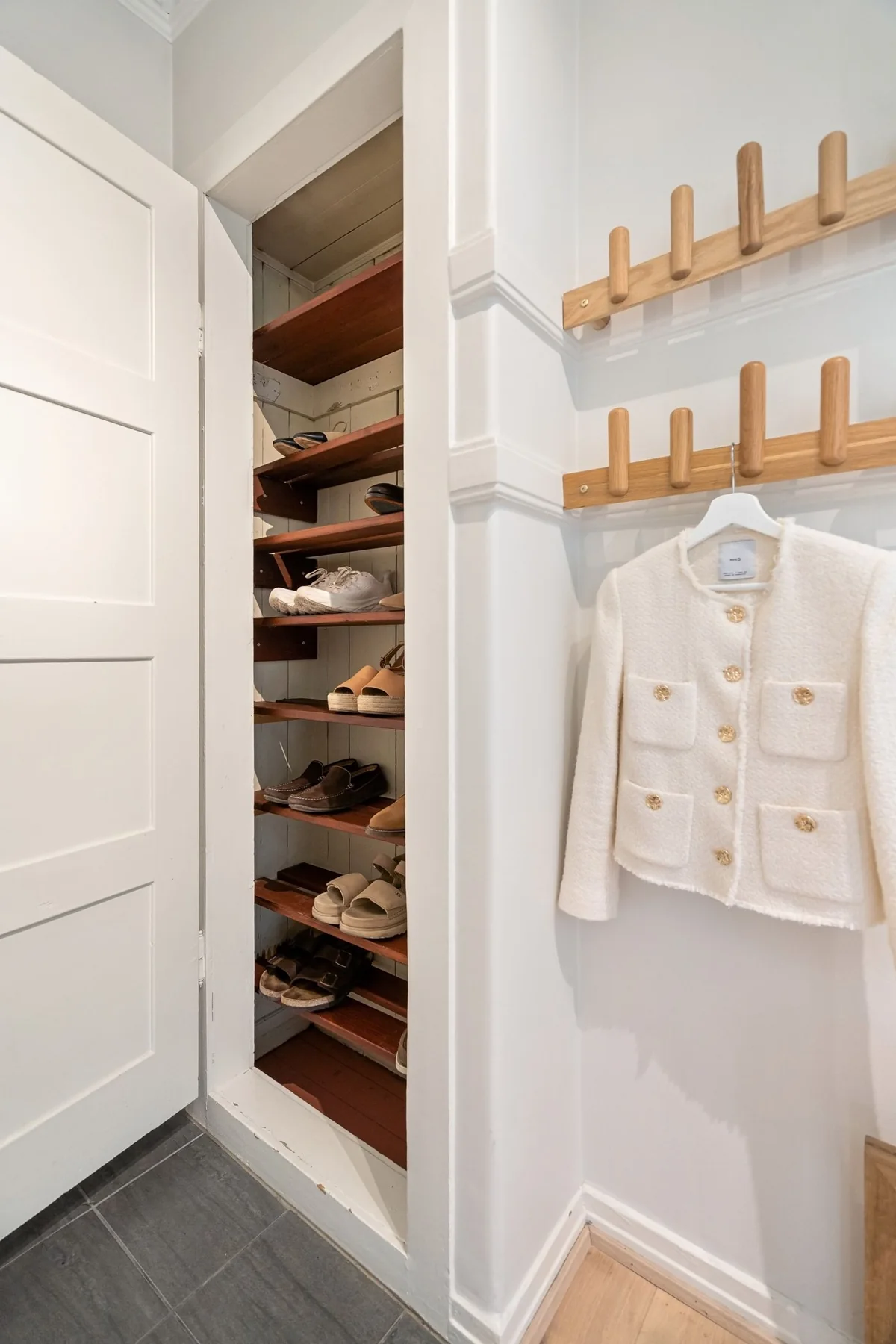
A row of hooks beside a doorway appears to offer useful extra clothing storage. Its success depends on what happens when someone actually opens the door, carries a bag through the opening or removes a coat. Start with those movements before deciding how many things the wall can display.
Follow the door through its movement
Open the door through the range normally needed, keeping fingers and clothing clear. Notice where a hanging sleeve or bag handle would meet the moving edge. A hook that remains visible when the door is shut may become awkward when it swings back against the wall.
Do not adjust a door closer, hinge or required access route to accommodate clothes. Choose a different storage position when the existing arrangement cannot accept belongings comfortably. The purpose of the hooks is to support entry and departure, rather than to make either movement more complicated.
Consider the hanging shape
A coat occupies more than its hanger-sized width once its sleeves fall to either side. A tote can project from the wall when filled, even if the empty fabric lies flat. Trial the actual belongings individually before adding a second layer of objects behind them.
Use the mounting and load guidance supplied for the hook arrangement. An attractive photograph cannot establish what a wall fixing can hold. If the installation information is unavailable, resolve that question before treating the row as dependable storage for heavier outerwear or loaded bags.
Keep the nearest hook simple
Give the easiest position to the item removed most often. This might be a light daily layer rather than the largest coat. Avoid hanging a frequently used sleeve through another bag's handles, where a quick departure could pull two belongings down together.
Keep small loose accessories elsewhere if they disappear behind coats. A hook does not need to hold a complete outfit. Dividing a scarf, keys and outer layer between suitable nearby places can be more manageable than stacking everything on the same projection.
Review the arrangement in use
Stand in the entrance wearing your normal outdoor clothing. Remove one item, put it back and carry your ordinary bag past the hooks. If you must turn sideways or lift a sleeve out of the way, reduce the contents before buying additional fittings for the same restricted space.
Ask another person who uses the doorway to try the arrangement too. Reach and carrying habits differ. A position that works for one adult should not be assumed accessible to everybody sharing the home. Keep the agreed arrangement understandable without a complicated set of household instructions.
When objects keep slipping
Check whether the item has a suitable hanging loop and whether the hook is intended for that use. Do not cut, pierce or stretch a garment merely to make it stay on a particular fitting. A hanger in a different storage area may be the more practical answer.
Review the row when seasons change. Remove belongings that no longer belong in the daily departure sequence, then repeat the door movement check. A modest amount of usable hanging space is more valuable than an overflowing arrangement that interferes with the entrance.
Related reading
Choosing a Coat for a Winter Commute, A Work Tote That Fits Your Actual Day.
Published and last updated May 12, 2024. Send an editorial correction.


