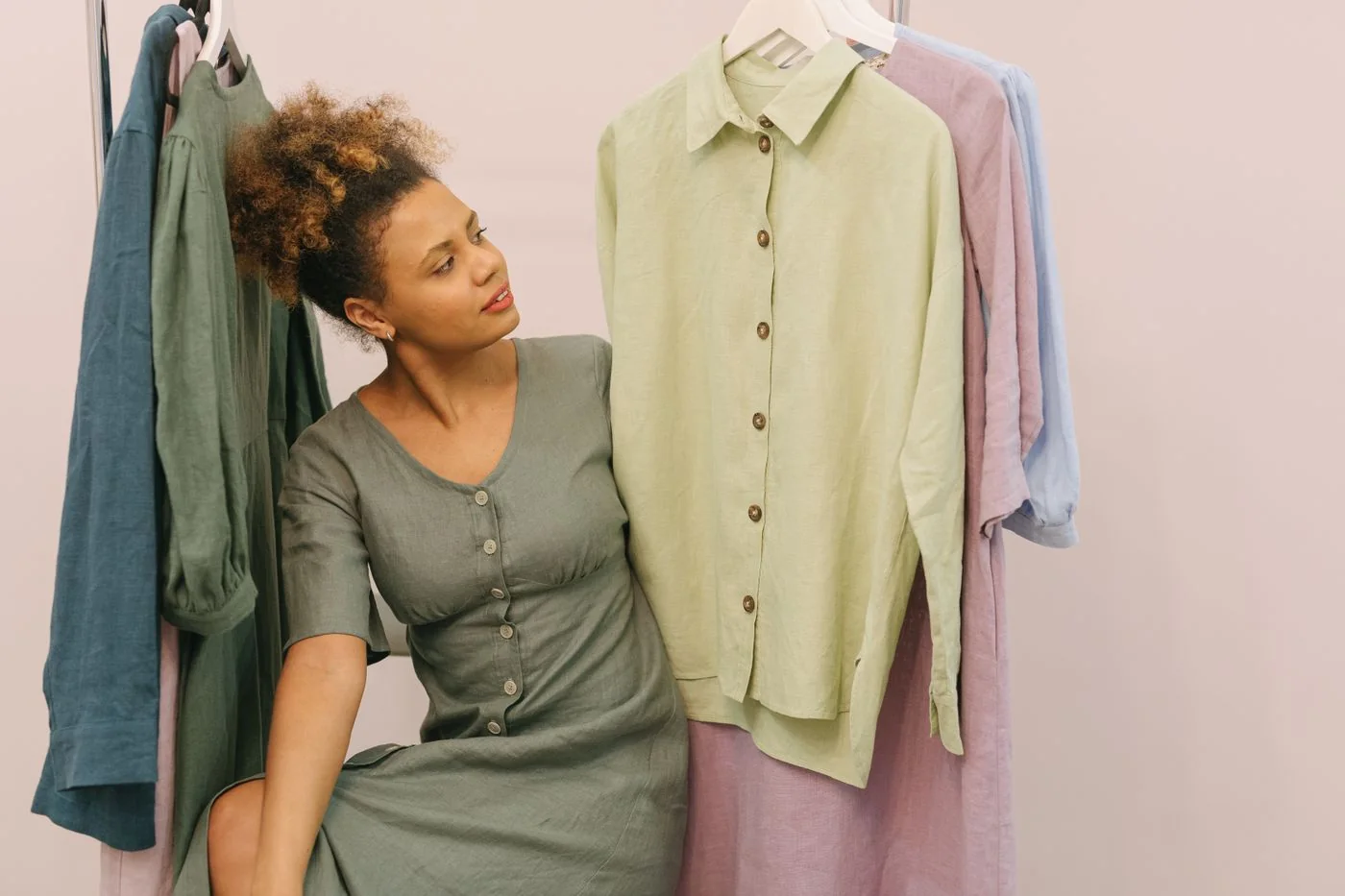
Shopping note: We discuss what to look for, rather than claim hands-on testing. Current shopping links are ordinary retailer links. Affiliate disclosure.
A lining can change how a garment feels and moves without being the first detail visible on a hanger. It may support drape, reduce some friction or provide additional coverage, depending on the design. Inspect the particular construction rather than assuming that lined always means better. The useful question is how the whole garment behaves with your intended layers and activities.
Look inside before trying it on
Read the composition and care information for both outer fabric and lining where supplied. Check seams, loose threads and attachments without pulling the layers apart. A lining may be attached at selected points rather than throughout the garment. Ask the retailer about unfamiliar construction instead of treating every free edge as damage.
Look at how the lining finishes near hems, slits, cuffs and fastenings. Check that it sits as intended when the garment hangs naturally. A visible lining may be a deliberate detail, but an unexpected twisted section deserves attention. Inspect the actual item you will receive when possible, especially when several sizes or display garments differ in condition.
Try the intended underlayers
Wear the underwear, tights, shirt or knit that will normally accompany the garment. Different surfaces create different friction. A skirt tried over bare legs may behave differently over tights; a jacket tried over a thin top may feel restrictive over textured knitwear. Keep the comparison realistic before deciding that a size is comfortable.
Walk, sit and reach as appropriate. Notice whether the lining allows movement or pulls while the outer fabric still has room. If it feels tight in a particular place, another size or cut may be more useful. Do not assume a lining will stretch into comfort or that removing it is a simple fix.
Watch the layers return after movement
Stand again and see whether the lining settles naturally. Check for catching at a slit or twisting inside sleeves. Some adjustment during dressing is ordinary, but repeatedly arranging an inaccessible inner layer can become inconvenient. Compare another garment when the problem appears consistent rather than forcing the same item into position.
If considering alteration, ask a qualified professional how changes affect both layers. Shortening or taking in an outer garment can require corresponding lining work. Request an estimate that includes the complete job. A low purchase price may be less attractive once several construction changes are included.
Match care to the way you will use it
Follow the full care label, including any restrictions created by the lining. Dry the garment as directed and check that layers are fully ready before storing it. Avoid improvised pressing temperatures or treatments based solely on the outer fabric. A useful garment fits both your wearing routine and the maintenance you can manage.
Is an unlined garment necessarily lower quality?
No. Some designs and fabrics are intentionally unlined. Judge comfort, construction, coverage and intended use together rather than using the presence of a lining as a single quality score.
See before-you-buy planning and occasion layers for a whole-garment decision.
Published and last updated May 12, 2026. Send an editorial correction.


