Shopping note: We discuss what to look for, rather than claim hands-on testing. Current shopping links are ordinary retailer links. Affiliate disclosure.
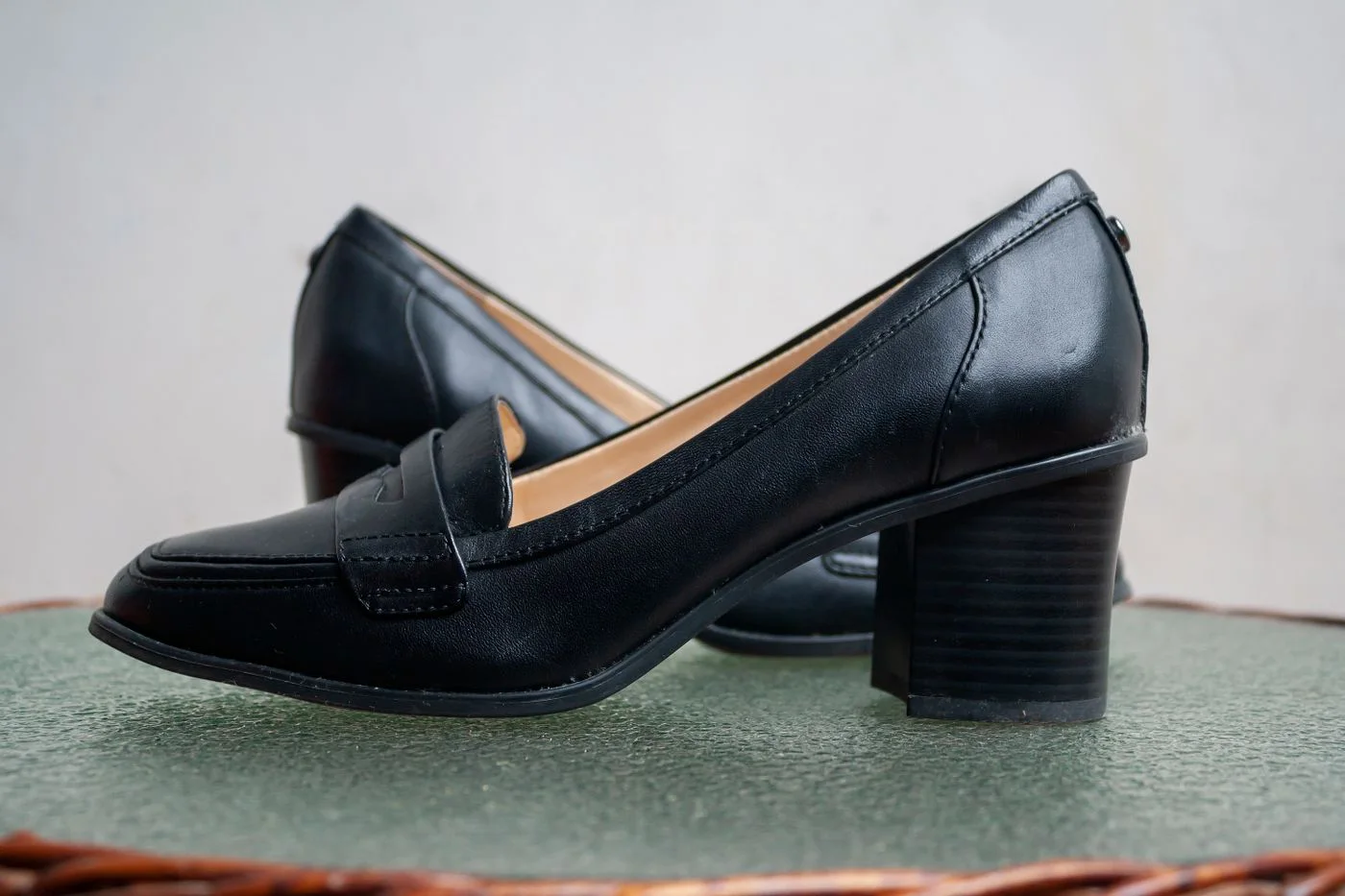
A low-heel shoe can resemble a familiar pair from the front while showing a different outline at the side. Read the available views together before deciding the candidate fills the same role. The visible heel, toe and upper contribute separate shapes, while fit and practical suitability remain questions for the actual product. A clear image comparison can inform the shortlist without pretending appearance supplies every answer.
Keep the exact candidate reference
Save the product title and relevant version with its images. Similar shoes can appear across related listings, and a cropped saved photograph may lose the context that identifies the actual item. The comparison should remain attached to one offer.
For a pre-owned pair, condition belongs specifically to that item. Do not substitute a new retail image or another seller's pair for missing information about the candidate. Similar appearance does not establish equivalent state.
Compare the full side outline
Look at the toe profile, upper opening and visible heel as different features. A broader lower shape and a narrower one can have different relationships with an intended trouser hem even when both are described as low heel.
Notice whether the image actually shows the whole side. A decorative crop may omit the rear or front edge. Missing information remains a question, not something to infer from a similar familiar shoe.
Use stated dimensions where supplied
A close product photograph and a casual image of an owned pair do not automatically have the same scale. Read actual product information rather than measuring the screen as though it were a reliable diagram.
Keep the method and units clear if dimensions are compared. A number without its stated scope may be less useful than it appears. Preserve any missing detail that could change the decision rather than forcing an exact comparison.
Separate visible surface from composition
A smooth or shiny-looking dark upper does not establish a material. Read the exact listing for composition and care, leaving uncertainty visible when the information is absent. The image contributes appearance within those limits.
The same applies to construction and performance. A low-looking heel does not prove comfort or suitability for an activity. Those ordinary questions follow the actual pair and intended use, beyond the outline shown in a photograph.
Give the candidate an owned outfit partner
Choose the trousers or skirt the shoes would actually meet. A different side shape may add a useful option, or it may repeat a role already covered. Name the visible difference before letting the shortlist expand through several similar products.
Keep a concise note of what is known and unresolved. The candidate's outline appears more substantial under the intended hem, while fit remains a separate question, is an understood comparison. Reading beyond the front image lets photographs support the purchase decision without becoming a promise the evidence cannot make.
Related reading
An Ankle Boot Listing Read beyond the Side View, A Shoe Try-On with the Outfit Role Made Clear.
Published and last updated November 12, 2022. Send an editorial correction.


