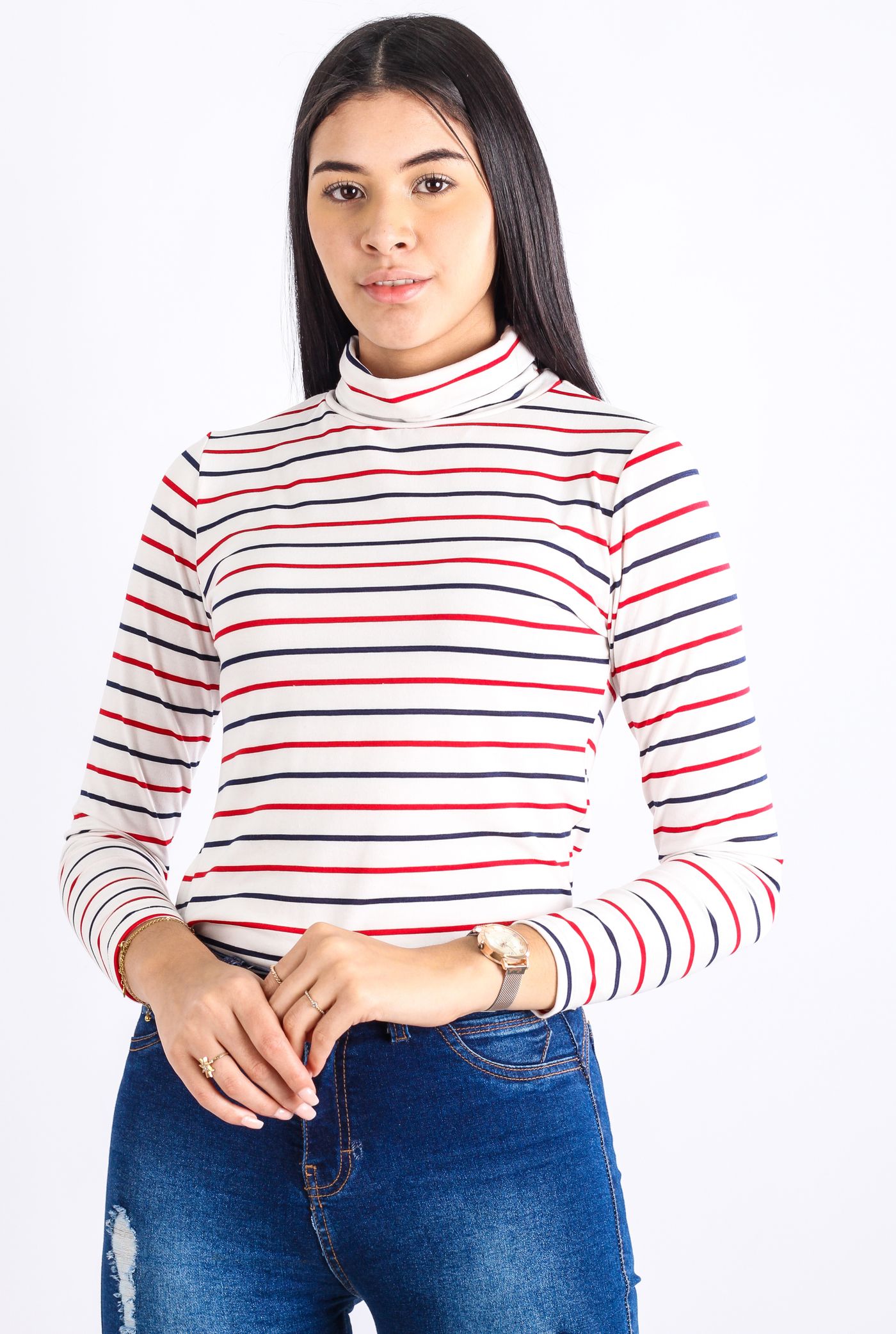
Shopping note: We discuss what to look for, rather than claim hands-on testing. Current shopping links are ordinary retailer links. Affiliate disclosure.
A striped top can be a quiet wardrobe regular or the strongest visual element in an outfit. Width and contrast matter as much as colour. Start with the bottoms and outer layer you already repeat, then compare how different stripes behave beside them. The goal is a useful relationship between pieces, rather than finding a pattern that obeys a universal rule about body shape.
Keep the silhouette consistent during comparison
Try tops with similar fit when judging the pattern itself. A fitted jersey and a loose woven shirt change several things at once. Check shoulder placement, neckline and sleeve length first, then notice the stripe. If one top feels better because it allows comfortable movement, do not attribute every difference to the direction of the lines.
Compare a finer stripe with a broader one in the same general colour family if possible. Look from a normal conversational distance as well as close to the mirror. A narrow high-contrast pattern may appear busier up close than it does in the complete outfit. Use your own preference rather than assuming a small pattern is always subtle.
Add the jacket you intend to wear
An open blazer creates a different frame from a cardigan fastened at the front. Check how much pattern remains visible and whether the neckline sits comfortably. A striped sleeve appearing below a jacket cuff can become another strong detail. Decide whether that repetition feels balanced or whether a simpler cuff arrangement suits you better.
If the coat or trousers also have a pattern, compare scale and colour intensity together. There is no obligation to mix patterns simply because the garments are available. A plain companion piece may make the striped top easier to repeat. Test one combination you genuinely expect to wear before inventing several theoretical outfits to justify the purchase.
Inspect construction at joins
Look at side seams, pockets and any panels where stripes meet. Pattern matching can affect the appearance, but a deliberate change in direction may be part of the design. Check the actual garment's finish and whether you like the result. Do not treat every interruption as a fault without understanding the construction.
Stretchy fabric can change the visible width of stripes when pulled. Check fit in movement and avoid buying a restrictive size solely to achieve a particular look. Follow care information, especially where reshaping or drying method affects the garment. A patterned top should remain manageable after its first wear.
Finish with a limited accessory choice
Try the usual bag, shoes and one preferred accessory. Notice whether additional contrast improves the outfit or makes it feel unnecessarily crowded. A stripe already supplies a clear rhythm. You can leave it to do that job without adding another focal point at every edge of the outfit.
Are horizontal stripes less useful than vertical ones?
Neither direction is automatically better. Fit, scale, contrast and the rest of the outfit determine whether you enjoy wearing the piece. Compare garments on your own terms rather than buying around a rigid rule.
See everyday straight-leg jeans and the white shirt off duty for simple companion outfits.
Published and last updated March 1, 2026. Send an editorial correction.


