Shopping note: We discuss what to look for, rather than claim hands-on testing. Current shopping links are ordinary retailer links. Affiliate disclosure.
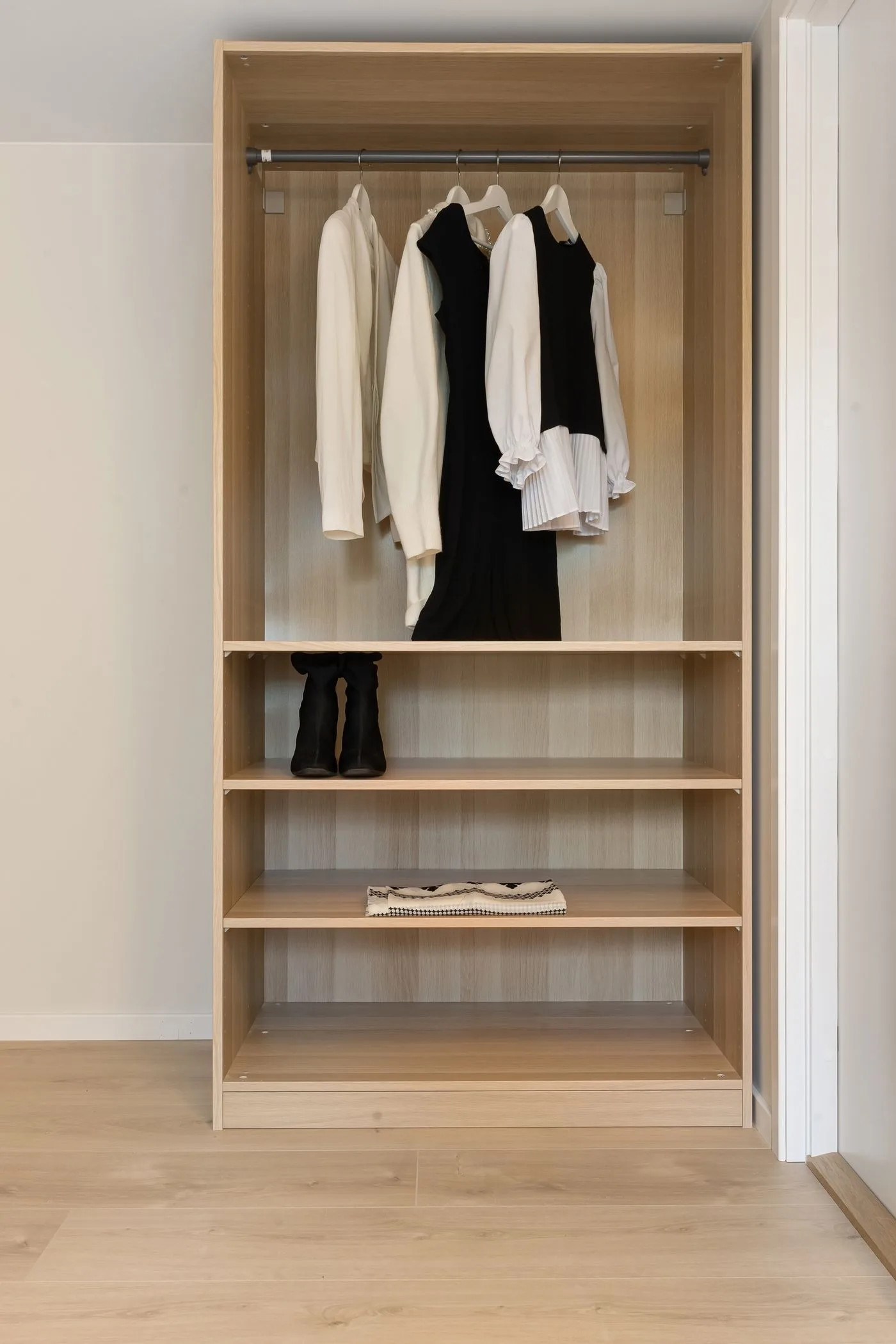
A wardrobe can hold the right clothes and still make them difficult to choose. Visibility depends on your height, the room's light and where the door allows you to stand. Review the everyday selection position before accepting a rail arrangement because it looks balanced in a photograph.
Stand where dressing actually begins
Approach the wardrobe in the ordinary way and notice what is at a comfortable viewing level. A shelf that seems useful when you lean inside may be obscured during a quick morning choice. Identify which clothes you recognise immediately and which require lifting other belongings out of the way.
Open the door as far as normal use allows without forcing fittings or blocking necessary movement. Check the view from that position. A wardrobe plan based on a door being held at an unusual angle may not reflect the room's everyday constraints.
Keep reach separate from capacity
The ability to fit a garment on a high rail does not mean it belongs there for daily use. Avoid standing on unstable furniture or stretching awkwardly to retrieve clothing. Use an appropriate storage arrangement that respects both the furniture instructions and the people using it.
If rails or shelves are adjustable, follow the installation guidance and account for their intended loads. Do not move structural components simply to copy another wardrobe layout. Where the existing unit cannot be altered suitably, change which belongings occupy its most accessible positions instead.
Choose the useful viewing group
Place frequently considered garments in the part of storage that is easiest to scan. This need not include every item worn often: a familiar folded base layer may be easy to find elsewhere, while several similar shirts benefit from a clear view of their fronts or collars.
Preserve the storage method appropriate for each garment. Do not hang a piece solely to make it visible if its care information calls for another arrangement. A clear shelf position, drawer division or small private inventory can make folded clothes understandable without changing how they are supported.
Plan for more than one person
In shared storage, compare comfortable reach rather than treating one person's eye level as the household standard. Agree which sections belong to whom and keep shared items in a mutually manageable position. The goal is ordinary access, not a perfectly symmetrical division of the wardrobe interior.
Leave room for a garment to be temporarily absent. A clear arrangement should still make sense when clothes are being worn or cared for. Avoid filling every gap with another category if that means the original piece no longer has an obvious place to return.
Test the next outfit choice
Choose an actual outfit using the proposed arrangement. Notice whether you can see the alternatives without removing half the rail. Put the rejected pieces back as well, because returning clothing is part of a workable wardrobe rather than a task postponed until a later tidy.
Review the layout after living with it through ordinary use. Move a small group if it remains overlooked; do not assume that the answer is more clothing. Better visibility can make familiar options easier to use while keeping the wardrobe's overall quantity and the room's furniture unchanged.
Related reading
A Small Autumn Wardrobe, Many Ways to Wear It, Before You Buy: A Wardrobe Shopping Plan.
Published and last updated August 1, 2024. Send an editorial correction.


