Shopping note: We discuss what to look for, rather than claim hands-on testing. Current shopping links are ordinary retailer links. Affiliate disclosure.
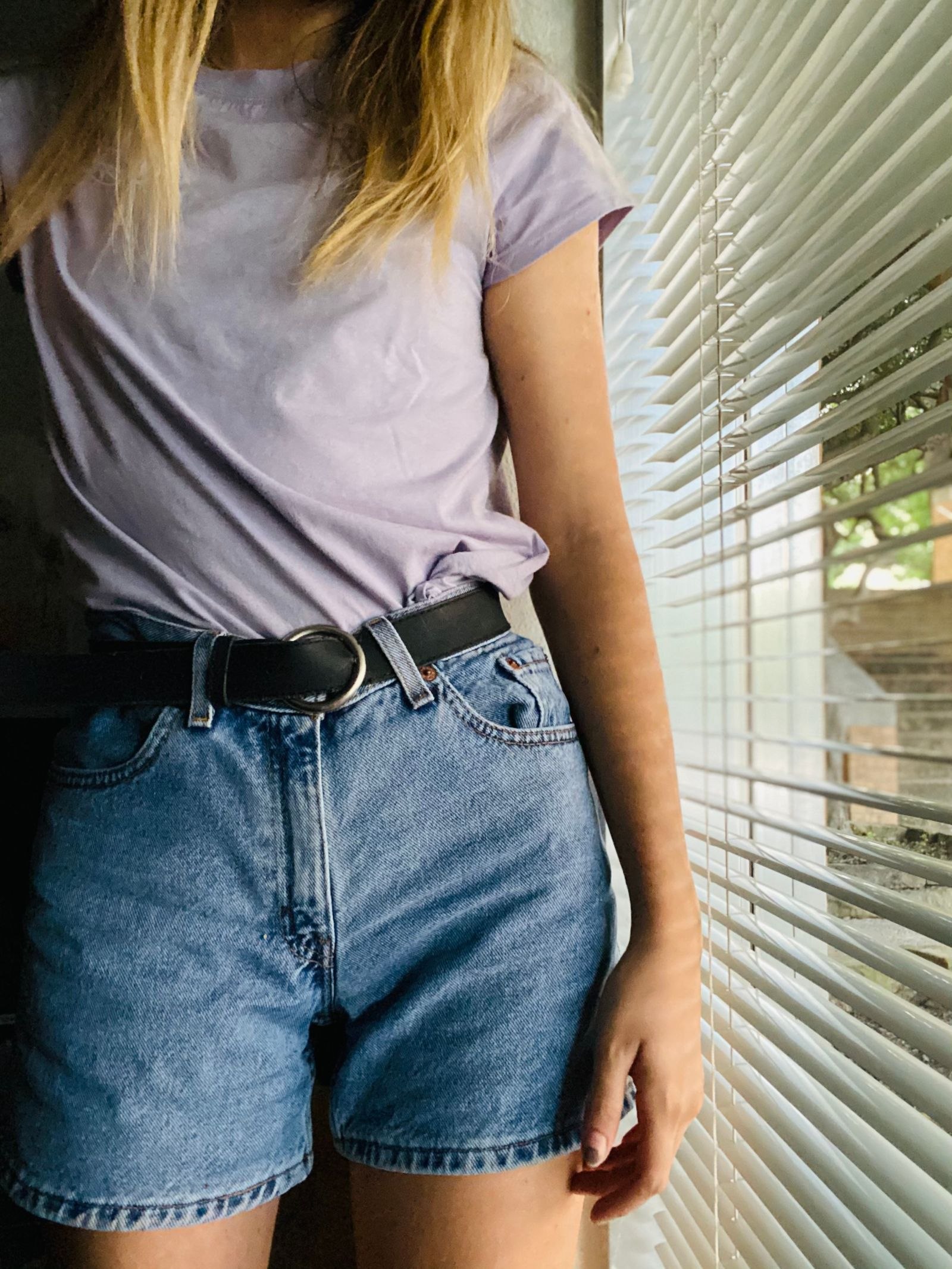
A belt can fit your waist and still be awkward with the trousers it was bought to support. The strap catches in narrow loops, the buckle presses while seated or the tail has nowhere sensible to go. Begin with the intended garment. Belt dimensions and waistband construction need to work together before colour becomes the deciding detail.
Check the actual loop opening
Measure or compare the space available without stretching the loops. A belt described as narrow or standard can vary between makers. Check its stated width and thickness, including any reinforced end. If trying before purchase, follow the retailer's handling guidance and avoid forcing hardware through an opening that clearly does not suit it.
Inspect the loops themselves. A loose stitch or weakened attachment is a garment issue that needs attention, rather than evidence that a wider belt will hold better. Follow suitable repair advice or consult an alterations professional. A belt should not be expected to compensate for trousers whose waistband or rise is uncomfortable in the first place.
Try the buckle while seated
Fasten the belt at a comfortable setting and move normally. Sit at a table, bend and put on the intended top. Notice pressure from the buckle and whether it changes the waistband's position. Compare the complete fastening, rather than choosing only by how much metal is visible in a front photograph.
Check the available adjustment positions without tightening to an uncomfortable setting. Your clothing layers and preferences can change between outfits. If the useful position falls between holes, ask the maker or a qualified repair service about appropriate adjustment. Do not assume that making extra holes yourself is suitable for every construction or covered by a return policy.
Manage the belt tail
Look at where the end finishes and whether a keeper holds it naturally. A very long tail can catch or require an arrangement you dislike repeating. A short one may struggle to stay secured. Check length guidance from the maker and compare it with an existing belt that works, measuring according to the instructions provided rather than guessing from trouser size.
Try the top tucked and untucked if both are part of the plan. A prominent buckle creates a different shape under a fine knit from a flatter fastening. You may prefer a decorative belt for visible wear and another arrangement for a covered waistband. One item does not need to serve every possible role.
Choose the finish last
Compare colour and hardware with shoes, bags and jewellery already worn. Exact matching is a preference, not a requirement. Read material and care information, especially if the belt will encounter frequent bending or outdoor weather. Store it as recommended and check for damage rather than continuing to tighten a worn fastening.
Does a wider belt provide better support?
Not automatically. Fit, construction and the garment's loops determine whether it works comfortably. Try the specific combination instead of choosing by width alone.
See everyday straight-leg denim and a wardrobe shopping plan before adding another accessory.
Published and last updated April 1, 2026. Send an editorial correction.


